Manuscript drafts benefit from a rest

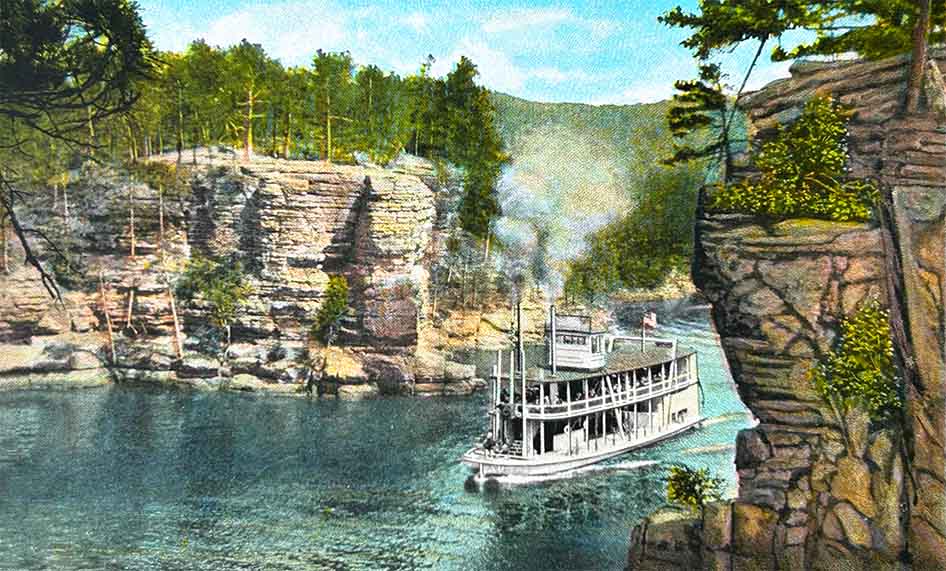
Vintage postcard: High Rock from Romance Cliff, Dells of the Wisconsin River.

Even fresh from summer vacation, taking a break from writing may be just what you need

Sometimes the best thing for your writing is taking a break from your writing. As such, I’ve built in a “rest” period for all non-deadline projects.

For example, after saving a revision, a project might seem good (or even great). Finished.

Resist the temptation to market the manuscript right away, because… When you read that same file a week or more later, any glitches, typos, or flat-out errors will pop.

Save yourself from the cringy rereading of a rejected manuscript and realizing exactly why it was rejected. You probably sent it out months ago, and now, given some time and distance, you can see the problem(s) the editors saw. To make matters worse, most markets won’t accept resubmissions of rejected work, so you’ve burned a market for that project.

A week to the wise

Even when a manuscript feels done, note in your calendar to check it a week from now. If you don’t need to revise when you reread the text next week, the project is probably ready to market. If you revise again, schedule a check another week out.

After a rest period, you’re more likely to approach your manuscript fresh. You see what a reader sees, not what you think you wrote. You’re more likely to hear the glitches or repetitions. You’ll see where content is missing or extraneous—things you thought you covered or cut. Similarly, you are likely to see where the text works well, repeats, or slows to a slog.

A month?

For larger projects or more significant revisions, a month’s rest may be useful. Take a month away to clear your mind of all assumptions. In the meantime, work on other projects, prep work, marketing plans, reading, and so on. You may stumble upon solutions to issues in your work-in-progress that require further revising, restructuring, expanding, or contracting.    

The trick with rest periods is not letting a break turn into abandonment, defeat, or worse. Keep going back, even to those projects that fight you.

Blog roll

See the following blogs/sites for other perspectives on writing breaks:

3 Resources to help writers get back on track: Motivation (lack thereof)

Vintage postcard: Forest Drive, Near Observatory Tower, Peninsula State Park, Door County, Wisconsin.

For some reason, meeting writing goals and finishing projects seem more difficult these days.

What’s getting in the way of your writing?

  • Is it the specter of AI replacing you as a writer? Or fears that AI could copy, replicate, and surpass your writing, as has happened to some visual artists?
  • How about the publications (markets) you’ve been watching that closed to submissions while they figure out how to handle all the AI-generated stuff?
  • Is it the revelations about contests/lit mags/publishers that continue to accept submissions (and fees) but never publish anything or much of anything?  
  • Have you received just one rejection too many?
  • Is it that life is getting back to normal, and suddenly there’s so much to do (besides writing) now that lockdowns are in the rearview?
  • Is it just summer?
  • Is it just me?

Setting writing goals, seeking inspiration, and addressing common frustrations seem to help. Or at least they sound good. Here are a few resources for writers:

1.      1000 Words of Summer

In her Poets & Writers Magazine article, “1000 Words of Summer: How an Accountability Project Opened Up My Writing Life,” Jami Attenberg discusses how a now-worldwide project started, “In 2018 my friend Anne Gisleson and I decided to write a thousand words a day, every day, for two weeks straight.” The #1000wordsofsummer project’s sixth year started on June 17, 2023, and Attenberg has been posting daily on her Craft Talk newsletter, as well as on Instagram and Twitter. Even if you’re starting this project late, there’s still time to read the newsletters and get a writerly boost.  

2.      Field Trips for Serendipity & Inspiration

Maybe you feel like you don’t have time to peruse a book or take a field trip, but maybe you’ll find information you need (a key, an inspiration) from an unexpected source. What book or artwork or object practically jumps out at you? Here are a few places that might coax creativity your way:

  • The recent releases shelf at your local library. What catches your eye? How might a source connect to your works in progress?
  • Museums, galleries, resale shops, flea markets, and more. Again, what are you drawn to? Ask yourself what the visuals, objects, and their histories could contribute to your writing. Maybe do some people watching too. For instance, I once saw a goateed woman haggling with a burly vendor over sewing notions at a swap meet.
  • Immersion in tastes, smells, and sounds. Indulge your senses at spice shops, confectionaries, farmer’s markets, ethnic restaurants, neighborhood sporting events, music recitals, and more. Sometimes just listening to buildings—the different sounds inside a high-rise and a hospital—can alert you to telling details for your writing.   

3.      Websites for Writers

Moderation (avoiding rabbit holes) is important, especially with websites, but sometimes hearing what other writers are saying is reassuring:

  • Writer Unboxed: This website “is dedicated to publishing empowering, positive, and provocative ideas about the craft and business of fiction… [T]he site now hosts more than 50 contributors, including bestselling and rising authors and industry professionals.”
  • Writer’s Digest’s 101 Best Websites for Writers: Past categories have included: Best Live Streams, Podcasts, and YouTube Channels for writers; Best Writing Advice Websites (including Writer Unboxed); and Best Genre/Niche Websites. The 2022 list came out in July, so the 2023 listings should be published soon.

In the end, doing something (anything short of a bonfire) with your writing is more productive than the alternative, right?

Related Post: Distractions: Don’t let Mr. Facebook and Ms. Phone keep you from your writing projects

Bookshelf: 3 how-to books on novel writing to keep your project moving

Vintage postcard: Moonlight on the Pennsylvania Turnpike, “America’s Super Highway.”

Working in tandem with a how-to book on the craft of novel writing can keep you connected to the big picture of your project. Writing creatively and critically at the same time can inch your novel project closer and closer to a satisfactory conclusion. Yay, a book!

Companion craft books (how-to books) can be lifesavers. They can keep you from drowning in detail or drifting wildly off course.

For example, sometimes you’re driven to figure “it” out. “It” may be big or small—from fixing the whole plot (big) to researching a telling character or setting detail (small). Depending on your tolerance for uncertainty, skipping a day (or more) of writing could become easy. Too easy. Weeks or months may pass since you’ve worked on your so-called passion project because you can’t figure “it” out.

Another example is that you may approach a novel project by writing and writing and writing. You think (hope) that one day your hefty word count will make great-American sense. However, you can end up with a hundred-thousand sprawling words that don’t fit well into current publishing models, unless you’re Diana Gabaldon or Thomas Pynchon.

Whether you’re just getting started or you’ve encountered one of those days when you don’t know what to do, how-to books on the craft of novel writing can keep your project moving forward. Nonetheless, while the following books, workbooks, and videos are great resources, the key is you. You need to keep working, keep trying.

Here are three how-to books on novel writing I recommend:

Story Genius by Lisa Cron

Story Genius by Lisa Cron. This 2016 book’s subtitle and sub-subtitle explain Cron’s approach, “How to use brain science to go beyond outlining and write a riveting novel* [*Before you waste three years writing 327 pages that go nowhere].”

Story Genius chapters on novel-craft include “What To Do” tasks that prompt you to examine the parameters of your current project. The tasks help writers avoid common glitches, such as neglecting to identify a main character or forgetting why your protagonist wants what s/he wants.  

“The reason that the vast majority of manuscripts are rejected—either by publishers or by readers—is because they do not have a third rail,” writes Cron. “Story is about an internal struggle, not an external one… [T]he internal problem predates the events in the plot, often by decades.”

Also check out: Curious to learn more about the “brain science” aspect of storytelling from the subtitle? Check out Lisa Cron’s 2014 TEDx Talk “Wired for Story” or her previous book by the same name, Wired for Story.


Save the Cat! Writes a Novel by Jessica Brody

Save the Cat! Writes a Novel: The Last Book on Novel Writing You’ll Ever Need by Jessica Brody. Brody adapts lessons originally intended for screenwriters to the needs of novelists. To make a story worth telling, Brody says you need “plot, structure, and character transformation. Or what I like to call the ‘Holy Trinity of Story.’”

The book provides exercises, checklists, and examples of how novels (and later movies), such as The Help, The Kite Runner, and Bridget Jones’s Diary, follow the 15-beat structure at the center of Blake Snyder’s 2005 screenplay-writing book Save the Cat! Brody adapts Snyder’s beat sheets, four-act structure, A- and B-stories, and more to the needs of novelists.

Brody includes manuscript percentages to help novelists know “What Goes Where.” For example, the “All Is Lost” beat should occur at about 75 percent of the manuscript with the “Dark Night of the Soul” following at 75-80 percent. Whether you’re writing novels for schoolchildren or adults, genre manuscript lengths can range from 160 manuscript pages to almost 600 pages. That’s why Brody’s percentages are useful across genres.

Also check out: If you have access to LinkedIn Learning, check out Brody’s course, “Write a Bestselling Novel in 15 Steps.” By using the Save the Cat! Writes a Novel book along with the online LinkedIn course you can speed up or slow down, as needed, to run your novel project through the “Save the Cat” method.


Writing the Breakout Novel & Writing the Breakout Novel Workbook by Donald Maass

Writing the Breakout Novel’s subtitle, “Insider advice for taking your fiction to the next level,” refers to the author’s background as the president of Donald Maass Literary Agency in New York and the broker of publishing deals with “six- or seven-figure advances.”

Writing the Breakout Novel Workbook, published three years later in 2004, offers “hands-on help for making your novel stand out and succeed.” By going beyond reading and notetaking with Maass’s “breakout” book, the workbook satisfies the need to dive into planning and drafting. Both the book and the workbook offer eye-opening information that can shake you out of the leisurely sail that you think might be a novel. Following the workbook lessons helps you to write smarter and stronger to create a more marketable novel. 

Do your own writing first: Motivation and productivity

Vintage postcard: Golden Temple of Jehol, Chicago World’s Fair, 1933.

“Pay yourself first.” This is common advice in employer 401K sign-up meetings and other financial planning-type sessions. They say: Save money for your future, your education, your first house, your retirement. Use automatic deductions so you never see the money as income. Watch your savings grow.

Similar advice is useful for writers. In other words, “Do your own writing first.” Instead of jumping onto social media or the daily news alerts or the work your employer has assigned you, do a bit of your own writing. Your benchmark here doesn’t need to be big.

You’ll be in good company. The American Masters documentary “Flannery,” which aired recently on PBS, noted Southern Gothic writer Flannery O’Connor’s slow, meticulous writing and editing that led to the publication of two novels, 32 short stories, and more. Comparisons were made to Gustave Flaubert of Madame Bovary fame who wrote a paragraph a day, as well as to Virgil, author of the Aeneid, who wrote a line a day or three lines, depending on your source.

When writing for yourself first, your daily time investment doesn’t need to be big. To start, maybe 20 minutes a day will do. Or even 200 words. Others might set their bar at hours of writing or thousands of words, but the key here is to make the process automatic. Regular daily attention to writing projects—even 20 minutes, a sentence, a paragraph, or more—may not seem like much, but it adds up.

When you don’t attend to your writing in a sustained manner, you may be shocked by how much time passes between writing sessions:

  • How did 10 days pass? I swore I did something on this last week. Well, I guess that would be 10 days.
  • How can it be a month, six months, a year, two years, four years, since I worked on this? I’ve been thinking about it forever.

That “thinking about it” can be the problem. In our minds our projects come together smoothly. They make sense. It’s only when you put in time with the actual words that the beautiful piece of writing you had in your mind betrays you. Writing is messy work that requires deep thought. Once you write about what you thought, there are deeper, murkier levels that need your attention. They need your attention in writing.

Maybe that’s another bit of advice we can use: “Get it in writing.” Get your ideas, your thoughts, your inspirations in writing. Work with them on a concrete level—word by word, line by line.

I encourage you to start your day with a bit of writing, even if it is only a few minutes before you log on to daily life. If your mornings are hectic, maybe you can find time at lunch or dinner or just before you go to sleep.

A daily writing practice will keep projects moving forward. They’ll grow. You won’t have to refresh your memory each time you start to work on them. That “thinking about it” will move forward to more advanced elements. For me, daily practice means I can keep several projects going at a time: before starting my day job, after lunch, after dinner, and more, if needed.

Daily practice can include editing, research, and marketing—whatever you need to move toward your goals. That’s why I work with a time goal instead of a words-per-day or pages-per-day goal.

I remember when wearing seatbelts regularly was a novel idea in my family. Then, my mother started having us put on seatbelts every time we got into the car. She said that after a month, it would seem natural. Few of us can imagine not buckling on a seatbelt these days, and that same habit-forming aspect is what we’re going for with daily writing.

If you write a sentence, if you write a paragraph, if you write 10 pages a day like Stephen King (see Stephen King’s On Writing), the feeling you’re going for is this: When you haven’t written for yourself first, something feels off about your day.

Stop thinking about those projects and start writing. Start with a reasonable goal. You can always build, but write for yourself first. Make the process automatic. Put it in writing. Watch your projects develop and grow.

Note: The 20th anniversary edition of Stephen King’s On Writing: A Memoir of the Craft was published in June 2020. Even if you’ve read his book before, including King’s 10-page/2,000-word daily writing goal referenced above, the book is worth re-reading.

Distractions: Don’t let Mr. Facebook and Ms. Phone keep you from your writing projects

Aquarium Bar postcard 18_0930b

Vintage postcard for the Aquarium Bar in Milwaukee. “Everything in the bar is alive—fish, frogs, alligators, turtles, lizards, etc.”

The first month of the fall semester is in our rearview mirror, and it’s about time for the first big papers and projects. So I thought I would share a couple things about writing productively that I reacquainted myself with over the summer.

“The writer is the person who stays in the room.” This is from fiction writer and teacher Ron Carlson, who is currently at the University of California, Irvine. (He served on my MFA committee at Arizona State University.) This quote comes from his craft book Ron Carlson Writes a Story: From the First Glimmer of an Idea to the Final Sentence (Graywolf).

Carlson also advises writers not to stop, not even to look up a word in the dictionary or a detail online. Move forward with your draft, and only your draft. Go back and clean it up later.

If Carlson is any indication, his advice works. He has published eight books of fiction, and his stories have been included in the Best American Short Stories series, The New Yorker, Harper’s Magazine, and more.

None of this is easy. The forces pulling you away from your writing include “Mr. Coffee and Mr. Refrigerator, and oh, there in the other room is Mr. Television, and there’s Mr. Bed,” writes Carlson.

When talking with my students about distractions I add Mr. Facebook and Ms. Phone and Mesdames et Messieurs Friends who want to hang out, drift, eat, and more. Then there’s Ms. Puppy and Mr. Kitten who need your attention so viscerally they will knock your laptop to the floor after walking across the keyboard. (The eating of homework is so ’80s.)

When I ask my students to write during class, it amazes me how weak their bladders become. One or two at a time, students saunter to the bathroom. Sometimes they pass the closest restroom and opt for one farther away. I rarely sense any urgency, except that they’ve been told to write and we all know how hard that can be.

So stay in the room. Stay in the chair. Stay away from technologies that may have been designed by marketers and psychologists to pull you deeper and deeper into their thrall and further away from your own thoughts.

“[T]he Internet is the enemy of the writer’s day,” writes Carlson, and I see this in my own productivity as well as in that of my students.

Stay on task. On goal. Focus on your own thinking and your own writing. Fight for it. You’ll thank yourself later.