Perseverance: Writing, revising over 30 years leads to published essay

Vintage postcard: The beach at Oceanside, Calif., from “Views Along the Coast Route between Los Angeles and San Diego.”

Good News: The Spectacle publishes “Scorpion Diary”

My personal essay “Scorpion Diary” has been published by The Spectacle, a literary magazine based at Washington University in St. Louis.

“Scorpion Diary” started as an outline of a boxing-type battle scribbled on napkins at a pizza-by-the-slice shop in 1992. The first drafts focused on the woman versus nature conflict, along the lines of, “Whoa, I lived with scorpions.”

Based on paid feedback from a Tahoma Review editor, revisions incorporated more “woman versus nurture” elements, namely the lasting effects of my mother’s alcoholism. Although I had been researching and drafting pieces about women alcoholics for years, Mom had a rock-wall silent treatment. I knew she wouldn’t understand my need to examine our lives in writing, let alone publish what I’d written. After she died, I restarted my work on this and several related projects.

NOTE: Tahoma Review, Craft, and other literary magazines offer paid feedback and critique options. Prices start at a few extra dollars for the “feedback option” on your submission, which yields a paragraph from a magazine editor. Projects that could benefit from in-depth critiques may cost $50 or more (much, much more). As always, select reputable organizations and editors who work with your type of writing. Beware of editors offering promises of greatness if only you’d send them more money.

Given the years I spent in stealth research mode, especially regarding women alcoholics, my source list for “Scorpion Diary” was long. Present-day websites, such as the “Alcohol Self-Assessment Test” from the National Council on Alcoholism and Drug Dependence, continue to prove helpful given the effects of substance abuse on families and children. My oldest source was a doctoral dissertation on Arizona scorpions from 1939.  

The college-instructor frame for “Scorpion Diary” came from chats with two students during a memorable pre-pandemic semester. One student felt she had to choose between supporting her alcoholic mother or pursuing her own goals to get an education and career. Another student was in crisis about how to get through the semester while keeping his family housed. I recognized the parental roles both students took on, complete with the burdens of guilt and Sisyphean responsibilities.

A major revision took “Scorpion Diary” (as well as “Handwashing Dishes,” which was published by Southeast Review) into second-person (you) point of view. Second-person POV helped me navigate glitchy passages that wanted to shift between first-person insights and third-person reportage. Second person offered a balance between emotional distance and experiential immediacy that conveyed more than I ever thought I could back when I was writing on those pizza-place napkins.

Readings that inspired my work in second person continue to include, Cherry, a memoir by Mary Karr, as well as chapters from The Rose Metal Press Field Guide to Writing Flash Nonfiction that focus on writing in second-person.

Recommended reading on the craft of fiction writing: ‘From Where You Dream’ by Robert Olen Butler

From Where You Dream: The Process of Writing Fiction by Robert Olen Butler is a book worth another look

‘Please get out of the habit of saying that you’ve got an idea for a short story. Art does not come from ideas. Art does not come from the mind. Art comes from the place where you dream. Art comes from your unconscious; it comes from the white-hot center of you.” —Robert Olen Butler, From Where You Dream

The best writing craft books transport you. You imagine you’re in a college seminar with an expert creative writing teacher. Unlike typical classrooms, however, these books allow you to work at your own pace.

Such expert teaching by Pulitzer Prize-winner Robert Olen Butler is captured in From Where You Dream: The Process of Writing Fiction, published by Grove Press in 2005.

Tapping into the unconscious, hence the word dream in the book’s title, is one of Butler’s main points. He offers insights into how and when to access your unconscious in the pursuit of art. Butler uses examples from his own, often messy, writing process to illustrate the yeoman work and perseverance required.

“You must … desire to create works of fiction that will endure, that reflect and articulate the deepest truth about the human condition,” Butler says in greeting his students. “I will take your aspirations seriously, and I will demand that you take them seriously.”

If your fiction is good, but not quite resonant or true, Butler’s insights and process tweaks may help you level up. The process won’t be simple or easy. However, the difference might be between creating fiction where you can pick almost any line and find something sensual, telling, and fresh (hint: Gabriel Garcia Marquez) versus writing that just gets the job done.  

For instance, to access the unconscious, Butler recommends journaling for 45 minutes to an hour, especially in the morning, as close to emerging from your dreams as possible. Similarly, journaling before sleep may also prime unconscious consideration.

“But here’s a certain kind of journal that might be useful to you: at the end of the day or beginning of the next day, return to some event of the day that evoked an emotion in you,” Butler says. “Record that event in the journal. But do this only—only—moment to moment through the senses. Absolutely never name an emotion; never start explaining or analyzing or interpreting an emotion…. Such a journal entry will read like a passage in a novel, like the most intense moment-to-moment scene in a novel.”

In discussing story drafts, both his own and those of students, Butler often focuses on the work of evoking emotion in fiction. You’ll better appreciate Butler’s feedback on resisting the urge to include labels or analysis within the writing after reading the drafts yourself. You’ll see what he identifies as working or not, as well as how his feedback may or may not align with yours.

For many, reading others’ rough drafts isn’t a favorite part of writer’s workshops (the type of class the book documents with help from co-author and teacher Janet Burroway). By examining student work, however, Butler’s book “shows” his teaching, instead of just telling. Learning by example often has more staying power than any lecture could.

Robert Olen Butler received the Pulitzer Prize for fiction in 1993 for his short story collection, A Good Scent from a Strange Mountain, and he continues to write literary novels, short stories, nonfiction, and more. He has decades of experience teaching creative writing, most recently at Florida State University. Butler’s innovations in writing and teaching have included his “Inside Creative Writing” series on YouTube, which invites viewers to look over his shoulder as he writes a new short story.


Worth another look…

Why writers should read ‘A Swim in a Pond in the Rain’ — Let George Saunders help you see more in the fiction you read and write

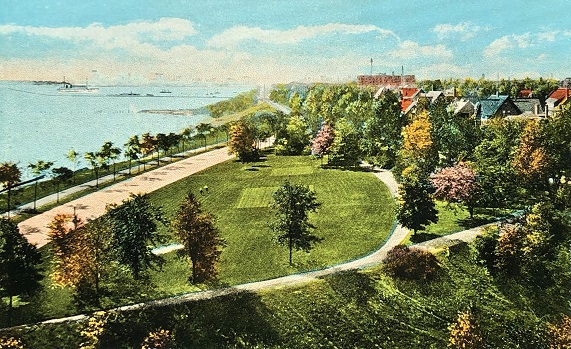
Vintage postcard: Lake Park and harbor view from lighthouse, Milwaukee, Wisconsin.

Recommended reading on the craft of fiction: A Swim in a Pond in the Rain (In Which Four Russians Give a Master Class on Writing, Reading, and Life) by George Saunders, Bloomsbury Publishing, 2021

In grad school, I remember how few of my MFA cohorts would admit they had “What the heck?” reactions to some of our fiction reading assignments. They always “got it” or at least grinned enigmatically.

However, writer and professor George Saunders acknowledges that his students at Syracuse University have had what-the-heck reactions to the short stories he assigns. To elicit such honesty from students, Saunders must create a collegial space for questioning and exploration in his classrooms. His 2021 book, A Swim in a Pond in the Rain, demonstrates this mode of inquiry.

In A Swim in a Pond in the Rain, Saunders shares the assigned readings, lectures, and discussions from his popular Syracuse course that examines the short fiction of several nineteenth-century Russian authors — Anton Chekhov, Ivan Turgenev, Leo Tolstoy, and Nikolai Gogol (who had Ukrainian roots). Within his analysis, Saunders acknowledges student critiques, such as that certain specifics seem like fluff.

Saunders shows how he can take a story that makes you shrug (and consider cutting by half) and helps you see how the writer’s craft works. At least once, he challenges you (and his students) to try cutting an assigned story, which turns out to be an insurmountable task.

These types of hands-on revelations are especially useful when turned to your own writing. Your awareness of what is and isn’t working in your own drafts grows after seeing these Russian stories through Saunders’s lens, alongside student and critical perspectives.    

One of the many concepts that will stick with me from this book is TICHN. “As we read a story (let’s imagine) we’re dragging along a cart labeled ‘Things I Couldn’t Help Noticing’ (TICHN),” Saunders writes.  Language choices, story structure, patterns, and so on — noted consciously (or not) — may fill the TICHN cart. For readers, the TICHN cart may offer aha! moments upon reflection. For writers, these elements may help bring together a story’s ending.

A Swim in a Pond in the Rain starts by approaching a Chekhov story one digestible page at a time: page, discussion, page, discussion, and so on. The book continues with newer translations of the Russian short stories, with each story examined further in “Afterthoughts.” At times, Saunders offers discussions of discussions that break down the stories through outlines, editing challenges, and exercises for students.

It’s no secret that I would recommend A Swim in a Pond in the Rain. As readers, this book helps us see how some notable fiction works. As writers, we can apply the knowledge and techniques revealed to our own fiction. As teachers or workshop participants, Saunders offers approaches and hands-on tasks to use in the classroom and beyond.  

Why literary magazines? They could be an important part of your book’s journey

Vintage postcard: General Motors Building, Chicago World’s Fair, 1933.

Start with the acknowledgment pages

If you read the acknowledgment pages of many novels, nonfiction books, short story collections, and poetry books, you’ll often see where earlier excerpts were published. This can tell you several things, including that the publications listed:

  • May be something you would like to read
  • May be markets for your own work

Often, first publications or excerpts appear in literary magazines. If you’re working on your own book or collection, literary magazines may be an important step in your reading, researching, and publishing journey.

For example, in World of Wonders: In Praise of Fireflies, Whale Sharks, and Other Astonishments, Aimee Nezhukumatathil’s 2020 book, the acknowledgments include literary magazines such as Brevity, Diagram, Ecotone, and Georgia Review.

Bully Love, Patricia Colleen Murphy’s 2019 poetry collection, lists acknowledgments for Hawaii Review, Heliotrope, Indiana Review, and many other publications. 

Finding literary magazines

Finding information about the literary magazines listed on an acknowledgments page is an online search away. However, reading the stories, poems, and essays they publish can get tricky. The spectrum of literary magazines ranges from fully online to print-only magazines that publish zero content online.

Reading content

Reading online literary magazines can be as easy as signing up on their websites, but reading print-based magazines may involve ordering print or electronic copies of individual issues. Some magazines offer pdf versions of recent back issues that may be available for reduced prices and quick access.

Don’t skimp on reading. An important part of the submission process is familiarizing yourself with individual literary magazines. Research what they’ve published. A friend of mine from grad school didn’t do this, and he ended up with a publication that he finds embarrassing to this day.

Submitting work

Submission windows for literary magazines may vary from one week to year-round. A few don’t accept any unsolicited work. Tactics to find these submission windows and writers’ guidelines start with a magazine’s website. If the magazine offers a newsletter, sign up to receive alerts about content, contests, submissions, blog posts, and (yes) fundraising.

Another tactic to find submission windows and guidelines is to “follow” publications in Submittable, an online submission management platform. Once you follow a publication, you’ll build a dashboard-like “Following” screen within Submittable that you can skim for “opportunities.” Some of these opportunities are solicitations to buy copies of magazines, but the majority are submission portals for fiction, poetry, creative nonfiction, comics, plays, contests, and more.

Setting your intentions

Many writers set quotas for themselves when drafting or sending out work. However, fewer writers seem to set reading quotas, such as to explore one new literary magazine each week. Or push your weekly reading to include at least one short story, essay, or set of poems from a literary magazine.

This intentional exploring and reading of literary magazines can yield inspiration, which contributes to your writing, revising, and submissions process. You’ll also gather valuable information about the literary marketplace, including where to find copacetic writers and editors.

For help, check out “Resolve to read a literary magazine,” a recent effort by the Community of Literary Magazines and Publishers. Click through the CLMP membership directory for reading and submission options as well as discount subscription bundles. 

Play with your words: Poetry craft, reading & revision

Postcard Florida lily pond 19_0924b - Copy

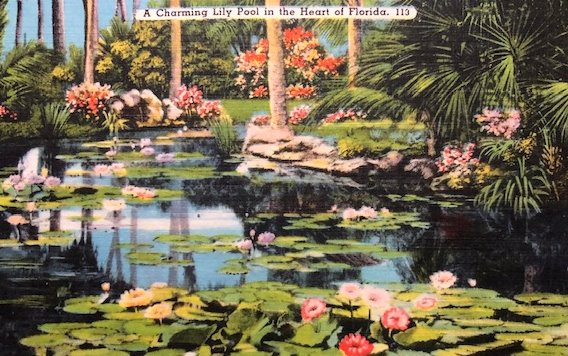
Vintage postcard: A charming lily pool in the heart of Florida

When I was in grad school a few of the poetry students seemed to be more, er, playful. I remember a potluck dinner at a professor’s house where one of the poetry contributions was an 8½-by-11-inch pan of Jell-O with mini bottles of booze gelled into it. The liquor was plucked out and consumed. The blue gelatin, not so much.

Outside of parties, there seemed to be little overlap between students and faculty in the poetry track and those in the fiction track. In hindsight, I wish my program had required us to take workshops and literature classes in other genres. For me, the magical realism class taught by Alberto Ríos offered the most in terms of genre blending with topics ranging from Dadaist poetry and images to novels by Isabel Allende and others.

Post-MFA I felt ill-prepared when my first teaching gig included a creative writing class meant to cover both fiction and poetry. I had much more to offer students in the fiction unit. For the poetry segments of the course, I relied heavily on the textbook.

Reading about poetry

Through the years I worked to make up for this gap in both my reading and my work in poetry. A few books I return to time and again are:

  • Poet’s Choice by Edward Hirsch. The book collects his columns from Washington Post Book World and covers an array of poets and poetry styles. The individual columns offer platforms for further reading, “from ancient times to the present,” and for drafting.
  • The Poet’s Companion: A Guide to the Pleasures of Writing Poetry by Kim Addonizio and Dorianne Laux. With sections on “Subjects for Writing,” “The Poet’s Craft,” and “Twenty-minute Writing Exercises,” this book is geared for classes or self-study. Wondering how to structure a sestina or how to address death and grief in poetry? This book can help.
  • The Poetry Home Repair Manual by Ted Kooser. This book is subtitled “Practical Advice for Beginning Poets,” and that’s what it was for me. This book helped me play with words and possibilities, even when I was writing about heavy topics.

Reading poetry itself

One of the usual prescriptions for writers is to read. Kooser’s book led me to subscribe to his column and others like it. Daily and weekly poems pop into my inbox from sources including:

  • American Life in Poetry—Kooser, a former U.S. poet laureate, sends out a weekly poetry column. Each column includes his introduction to the poem and some basics about the author of the week’s poem. Access the columns online at americanlifeinpoetry.org or subscribe (free) to receive the week’s poem in your inbox. The column’s supporters include The Poetry Foundation.
  • Poem-a-Day—The Academy of American Poets offers, both on their website or via free email subscription, a variety of poetry that includes pieces by contemporary writers, works in progress, and samples of centuries-old verse. Each Poem-a-Day email has a statement from the poet about the genesis of their work or a historical note, as well as a brief author bio.

Any of these inbox poems can lead to deeper dives into the poetry of individual writers. Reading a whole book from a particular poet can help you connect to their work in a way that a single poem often cannot.

NOTE: Content on the Poetry Foundation and the Academy of American Poets websites also cover the craft of poetry and are a useful accompaniment to the books mentioned earlier.

Seeing revision in progress

Another helpful area of reading has focused on revision. One book in particular made me feel like I’d observed a college poetry workshop in that it took student-level poems and offered critiques from an array of teacher/poets:

  • Poets Teaching: The Creative Process edited by Alberta T. Turner. This is an older book, published in 1980, that I rescued from a bin headed to the college Dumpsters. (Who knew that indexing books in online databases costs more than keeping the books on the library shelves? But that’s a matter for another day.) This book advanced my understanding of line, exposition, sound, and so much more.

Each student poem in the book received extensive comments (sometimes contradictory) from two or more of the thirty-plus teachers, among them David St. John, William Stafford, and Thomas Lux. Occasionally, the teachers offered line-level suggestions for the more advanced poems to show how handling lines in different ways led to different effects.

Some feedback in this book made me shudder. Individual teachers didn’t hold back from labeling writing as “boring.” One even said, “it may turn out her abilities do not lie in writing, but in some other direction entirely.” Yikes! Is this any indication of what goes on in college-level poetry workshops? Or is it just a few of these teacher/poets?

Play with your words

Beyond reading poetry, craft, and revision texts, I’ve learned you should play with your words. Let yourself do the writing equivalent of chilling mini-bar liquor bottles in a tray of blue Jell-O. You can always pluck them out, throw them out, consume them, or turn them (or the Jell-O) into something else entirely in the next draft.

Review of ProWritingAid editing app: Calling in reinforcements

Royal Canadian Mounted Police 18_0828b

The Royal Canadian Mounted Police

I’ve tested ProWritingAid, an online editing app, on nonfiction and fiction projects, and I’ve had positive results both times. I started out using the free version, which limited me to examining 500 words at a time. This meant one of my projects, at over 5,000 words, needed to be broken into 10-plus pieces.

Of the report options and filter criteria available, the following led to the most useful revision work for me:

Style—Flagged passive and hidden verbs, long subordinate clauses, and repeated sentence starts.

Overused—Noted my tendency to start sentences with –ing verbs, as in: cleaning, frowning, sitting, turning, panting, and so on. Also, reported that my writing was high on to-be verbs (was/were).

Readability—Designated paragraphs as “easy,” “slightly difficult,” or “very difficult.” I looked closely at sections underlined in red, meaning “very difficult.” As a result, I saw ways to break sentences and weed out extraneous material.

Diction—Highlighted vague and abstract words. For example, I used “would” and “about” in places calling for more precise wording.

Repeats—Underlined phrases that recur. For instance, how had I missed the repetition of the eight-word phrase “I got down on my hands and knees”? The report also identified repeats in shorter word groupings.

ProWritingAid isn’t a substitute for a human writer/editor. However, in the often solitary work of writing, revising, and editing, using the app felt like calling in reinforcements.

The app helped me focus on slow or awkward sections of my writing. The result: I trimmed several hundred words from my nonfiction project while making the language and sentences more precise. I had a similar experience when using the editing tool on a fiction project.

Note: Soon after trying the free version, I received a 50 percent discount offer from the Writer’s Digest free weekly enewsletter. I liked the app, especially with the discount, so I paid for premium access.

P.S. Just for grins, I ran a poem through ProWritingAid. The summary report gave me my first 100 percent score. Among the high points were that my vocabulary was more “dynamic” than 96 percent of the software’s users. At same time, my sentence variety was assessed as being “very low” because I used too many short sentences.

“To Walk Chalk” in Superstition Review

1898 house parlor to dining room (800x408) (2)

My story “To Walk Chalk” has been published in Superstition Review, an online literary magazine at Arizona State University. (The review staff was wonderful to work with, and they run a great website.) Here’s the link to the short story: “To Walk Chalk.”

The setting for this story stuck with me years after seeing a newspaper ad for Sharer’s Funeral Parlor and Mortuary in my grandmother’s scrapbook. The address for the mortuary was the same as the house my great-great-grandfather had built in 1898 in a small Wisconsin town known for tobacco farming. My grandmother had lived in that house for the majority of her eighty-plus years.

Problem: No one in the family had ever been in the mortuary business. No one in the family had the last name Sharer.

Answer: The family home had been rented out during the Great Depression.

Only after learning this did it make sense why my grandfather had once told me, “They embalmed people in the basement.” I must have been twelve when he said this, and it changed my perception of the basement forever.

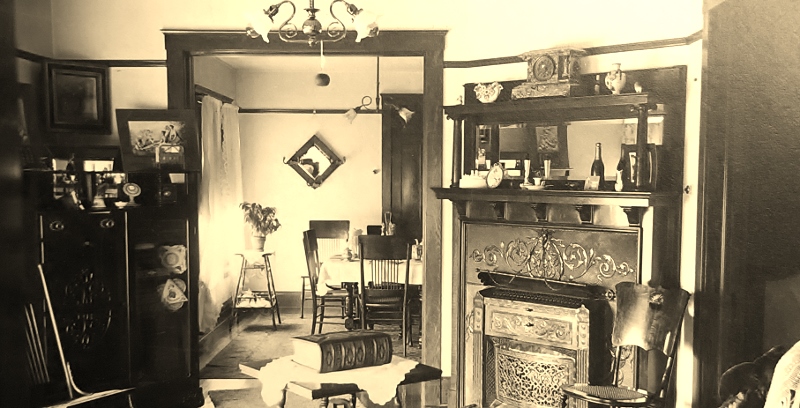
The house is no longer in the family, but we have pictures such as the parlor scene above. And now some of my memories have been spun into the short story, even if I modified the description of the house’s exterior to include details from at least two other Wisconsin buildings.